Commercial Waste Removal in Hatch End

Commercial waste removal in Hatch End needs a service that is organised, careful and practical from the first load to the last sweep-through. We handle routine business waste collections, one-off clearances and site tidies for premises that need a tidy, lawful way to move waste on without disrupting the working day. The focus is on removing commercial rubbish efficiently while keeping the process straightforward for offices, shops, hospitality premises and other local businesses.
Our work can include mixed waste, packaging, general office rubbish, redundant fixtures and bulky items that no longer have a place on site. Where a business needs a more structured approach, we can separate materials for reuse, recycling or disposal according to what is presented. If you are planning a clear-out or need a regular reset of accumulated waste, start with the main load and build from there. Clearer waste streams usually make the collection process simpler, especially where access or timing matters.
To request a quotation, send over a brief outline of the waste you need removed and the sort of site it is coming from. If there are awkward access points, heavier items or a deadline to work around, include that in the first message so the job can be scoped properly. A short description is often enough to begin. For a tailored price, tell us what needs clearing and when it needs to happen.
Business waste collections arranged around your site
Business waste removal is most useful when it works with the rhythm of the premises rather than against it. That can mean taking away sacks, boxes, broken stock, archive material, worn fittings or a mix of items gathered from day-to-day operations. We deal with waste that has built up in storage rooms, back areas, offices and communal spaces, helping businesses keep circulation areas open and working environments more manageable.
For some premises, the better option is a scheduled collection pattern; for others, a one-off removal after a change of layout, stock refresh or end-of-tenancy clear-out makes more sense. Business waste removal is a sensible starting point when the waste comes from an ongoing workplace rather than a household setting, while waste removal suits broader mixed loads where the contents are less specialised. The right choice depends on the type of material, the volume and how quickly it needs to go.
There are a few details that make quotations easier to prepare. A short list of the main item types, the number of sacks or containers, whether anything is unusually heavy, and whether the waste is on the ground floor or upstairs all help shape the plan. If you can include photographs, that can be useful too, but they are not essential in every case. The aim is to set out the job clearly enough that the collection can be organised properly.
Office clearances for desks, files and stored equipment

An office clearance usually calls for a neat, structured approach because the load often includes a mixture of furniture, archive material and loose items from different parts of the workspace. Desks, chairs, cabinets, screens, shelving, stationery stock, boxed files and redundant IT equipment can all form part of the same project. We can remove what is no longer needed and leave the office easier to reorganise, repurpose or hand over.
Some offices need a modest tidy, while others need a fuller clear-out before refurbishment, relocation or a change of use. Office clearance is useful where the contents are mainly workplace items and the goal is to empty the space with care. If the job includes a broader mix of household-style belongings as well as office pieces, home clearance or house clearance may be more appropriate, but only where the site itself and the contents genuinely suit that route.
When you prepare an enquiry, think in terms of access rather than just item count. Lift availability, parking, stairs and the distance from the work area to the loading point can affect how a clearance is arranged. It also helps to say whether anything must remain in place, such as fixed storage or equipment that will stay on site. This keeps the scope precise and reduces the chance of misunderstanding.
Bulky furniture and appliance disposal for premises
Commercial premises often accumulate items that are awkward to move, even when they are no longer valuable in day-to-day use. Tables, shelving, reception seating, filing units, display fixtures and similar pieces can take up useful floor space once they have reached the end of their life. We remove bulky items in a way that is practical for the site and suitable for the material type, with attention to lifting, loading and sorting where different materials are mixed together.
For items that are best treated separately, there are more focused routes such as furniture clearance and furniture disposal, which are helpful when the main task is to take away bulky fittings rather than a general waste stream. If the job includes worn sofas, waiting-room seating or similar soft furnishings, mattress and sofa disposal may fit better. Where the material is a mix of unwanted fixtures and general rubbish, the broader service remains the easier option.
It is sensible to flag anything that is especially large, heavy or difficult to separate from surrounding items. Some pieces may be straightforward to move once they are disassembled, while others need to be handled intact. If a load contains fragile surfaces, integrated components or fixed-in items, that should be mentioned early so the removal plan matches the actual work rather than an assumption.
Loft, garage and storage-area clearances
Storage spaces in and around commercial properties often become holding areas for old stock, seasonal items, packaging, archives or equipment that is no longer in active use. Over time, that can reduce usable capacity and make it harder to keep the rest of the premises organised. We clear lofts, garages and similar storage areas where the work involves mixed items that need sorting out before the space can be used properly again.
For more specific clear-outs, loft clearance helps when the waste or stored material is above the main working level, while garage clearance fits premises with a separate store or outbuilding. Where the contents include larger domestic-style items or a fuller property emptying, flat clearance can be a relevant route if the setting genuinely matches that sort of job. The important point is to match the service to the actual contents and access conditions.
These areas can be awkward because of low headroom, narrow approaches or limited lighting. A useful enquiry will mention how the space is reached, whether there is a fixed staircase or ladder, and whether the contents are stacked tightly. If you already know that some items are to stay behind, that should be made clear at the outset so only the correct material is scheduled for removal.
Waste from refits, strip-outs and building work

Commercial sites often need waste removed as part of a refit, light refurbishment or strip-out, and those jobs can produce a different mix of materials from routine workplace rubbish. Offcuts, broken fittings, packaging, rubble in limited quantities, old boards, fixtures and mixed debris all need separating and loading with care. We provide a practical removal service for that sort of material, especially where the site needs to keep moving while the work progresses.
For projects with heavier or more construction-led waste, builders waste clearance is the most direct match. Where the job is simpler and mostly involves general rubbish from works on the premises, the broader waste removal page covers the overall service well. If the waste includes items with special handling needs, such as sharp fragments or contaminated material, those details must be identified separately because not every load is suitable for the same treatment.
A good quotation request for building-related waste should note the stage of the job, the volume involved and whether the waste is loose, bagged or still mixed with reusable fittings. Timing also matters because works sites can change quickly. If there is a handover date or a point when the area must be fully clear, say so at the start rather than after the collection has been described.
Special items and selected disposal routes
Some commercial waste does not fit comfortably into a general mixed-load collection, either because of its size, its material makeup or the handling required. That is where more specific disposal routes become helpful. Separate treatment can be useful for electrical items, refrigeration units, sanitary fixtures, confidential paper, mattresses or unusually awkward bulky waste, provided the contents are suitable for the chosen route and clearly described before collection.
Relevant options include fridge and appliance removal for larger white goods, confidential shredding for paper that needs secure destruction, and hazardous waste disposal where a load contains materials that require particular care and cannot be treated as ordinary rubbish. For soft or awkward bulky items, mattress and sofa disposal can be the more suitable path. Choosing the right route matters because it helps the waste be handled properly from the start.
Before arranging removal of specialist items, check whether the load contains a mixture of normal waste and regulated material. That distinction affects how the job is priced and planned. If in doubt, describe the contents plainly rather than trying to sort them by service name alone. A short inventory is often enough to show whether the item set is straightforward or needs more careful handling.
How we organise commercial waste removal
Commercial waste removal works best when the job is prepared with enough detail to avoid delays on site, but not so much that it becomes overcomplicated. The first step is usually to identify the main waste types, the access conditions and the rough amount involved. From there, the collection can be planned around the site layout, the lifting needed and the time available for the work. That keeps the process orderly and reduces unnecessary back-and-forth.
One simple way to think about the job is to group the waste into what is staying, what is going, and what may need separating before removal. If the site has several areas with different waste types, it can help to note them in order. For example, storage room, back office, front-of-house area or loading bay. This is not about making the enquiry lengthy; it is about making sure the collection team understands the practical shape of the work before arrival.
Some loads are best handled as a single clearance, while others are better split into stages. That can depend on access, floor level, the volume of bulk items and whether part of the premises must remain operational during the collection. The more accurately the job is described, the easier it is to set the right plan and avoid unnecessary disruption.
Understanding value, sorting and recycling choices
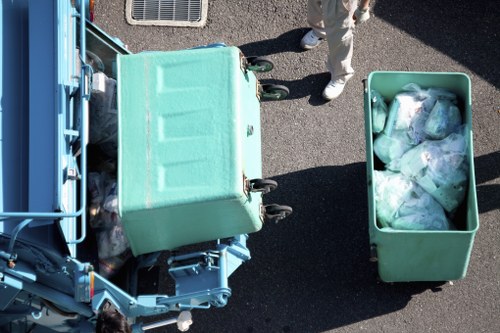
Commercial waste is not always just a disposal problem; in some cases it contains materials that can be separated and directed more appropriately. Cardboard, certain metals, office furniture, reusable fixtures and some appliances may all need different handling, depending on condition and composition. Where practical, that sorting can support a more measured approach to clearance rather than sending every item down the same route.
Recycling and sustainability explains the wider approach to diverting suitable materials away from simple disposal, while pricing and quotes is useful when you want to understand what affects the cost of a particular load. The main factors are usually the volume, the type of material, the ease of access and whether any items require extra handling. It is better to describe those points clearly than to guess at a price from an incomplete list.
If the waste includes both straightforward and more complex items, it is often worth identifying the less obvious pieces first. A few minutes spent listing the awkward items can save confusion later. For example, a light office clear-out and a load containing broken fittings and appliance waste may look similar at a glance, yet they can call for a different approach once the contents are broken down properly.
About Hatch End
Hatch End is a north-west London district associated with the London Borough of Harrow and the wider historic area of Middlesex. It developed as a more suburban settlement during the spread of rail travel in the nineteenth century, and its character today reflects that history of growth beyond the older village pattern. The area is known for a largely residential landscape, with a local centre that includes shops, services and transport links along Uxbridge Road and nearby routes. Hatch End station, on the London Overground network, has long been an important part of the area’s identity and connectivity, linking it with other parts of north and west London. The surrounding streets contain a mix of late Victorian, Edwardian and later twentieth-century housing, along with some smaller commercial parades and community uses that give the district a settled suburban feel. Local green spaces and nearby recreation grounds contribute to that character, and the area sits not far from larger open landscapes in Harrow and the wider edge of London. Hatch End is also associated with a modest but distinct local high street culture, with restaurants, cafés and everyday amenities concentrated around the centre. The name itself appears in several local references and is often used to distinguish the district from neighbouring parts of Pinner, Eastcote and Headstone. As with many outer London suburbs, its present form reflects both railway-era expansion and later infill development, producing a place that feels established without being densely urban.
Clearances for homes, flats and mixed premises
Although the main focus here is commercial waste removal, some customers also need a service that can cope with mixed premises, converted buildings or properties where business and household items have become intertwined. In those cases, it helps to choose the clearance route that best matches the actual contents rather than the label on the building. A flat above a shop, a storage room with domestic items, or a mixed-use space may each call for a slightly different plan.
House clearance is relevant when the contents are mainly domestic, while flat clearance is often useful for compact properties with limited access and mixed furnishings. If the job is more specific to a single room or smaller set of items, such as a garage or loft above a business or residential unit, the more targeted services can sometimes be the better fit. The aim is to match the clearance to the actual load rather than to assume one broad route covers everything.
When you ask for a quotation, keep the description plain and practical. Say what needs removing, what needs to stay, and whether the items are concentrated in one area or spread across several rooms. That gives enough structure to prepare a sensible response. Contact us if you are ready to outline the job and want the removal arranged around the site and the waste type.
What to include when you request a quotation

A concise quotation request should give the essentials without becoming a long inventory. The most useful details are the type of waste, the approximate amount, the location of the items and any access issues that may affect loading. If there are materials that need separate handling, say so from the outset. This keeps the discussion focused and helps produce a realistic response rather than a rough guess.
- Main waste type and whether it is mixed or sorted
- Approximate volume, number of items or number of sacks
- Floor level, stair access, lift access or loading bay details
- Any bulky, heavy, sharp or specialist items
- Preferred timing and any site restrictions
If you are comparing more than one service option, think about whether the contents are mainly business waste, office items, bulky furniture or a specialist load. That distinction often makes the route clearer. Once you have the basics together, it is much easier to ask for a quotation that reflects the real job and avoids unnecessary assumptions.